Why You Don't Need Residential Reverse Osmosis Water Systems
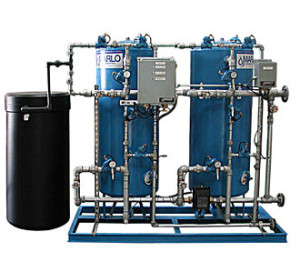
What more can I say about residential reverse osmosis water systems? I can continue to write articles explaining to people that reverse osmosis systems residential owners are not happy with the results that they are getting. I simply want to convince everyone that home R.O. is not the answer.
The companies that manufacture them have touted residential reverse osmosis water systems as the end all to be all water purification systems. They are hardly purification systems; they merely de-mineralize our water. You will still receive the same dose of chemical and biological contaminants even with the use of an R.O. system.
Only reverse osmosis systems residential owners that live outside of the mainline area actually receive any benefit from its use. Those drawing their water from wells or open water sources find the system necessary in order to remove silt. Even then they need additional filtering to actually purify their drinking water.
If you live within the service area of a water treatment facility then residential reverse osmosis water systems are a waste of money. The treatment facility has already run the water through repeated R.O. cycles to remove silt and sand, so no further filtering of that nature is necessary.
Many reverse osmosis systems residential owners are finding out about the shortcomings of their chosen filters very quickly. The machines can be quite expensive at up to $10,000 for a high quality system, and they run on electricity. You can expect your electric bill to take a big jump once this unit is in use.
The main problem is the residential reverse osmosis water systems complete inability to remove the chemical and biological contaminants that threaten our health every day. Even the R.O. units at the water treatment plant, which are far more sophisticated than any that you could purchase, cannot remove them. Know more https://www.watersystemsguide.com/whole-house-reverse-osmosis-systems
The reverse osmosis systems residential owners use are extremely limited. All of the mineral composition has already been removed, so what is your system actually doing other than running your electric bill sky high? You are still in need of additional filtering, so if you haven't already bought one of these systems, then you should just forgo it.
There are far better methods of protection than residential reverse osmosis water systems. A home water purification system with a granulated activated carbon and multi block filter will remove all of the dangerous chemical contaminants that the R.O. system fails to remove.
If you want to rid your water of the biological health threat, then a unit that features a sub-micron filter is in order. Microscopic parasites and bacteria that were not removed by the chlorine disinfection process can come back to haunt a reverse osmosis systems residential owner, but can be effectively eliminated by sub-micron technology.
I truly hope that I have been able to convince you that residential reverse osmosis water systems are simply not the way to go if your goal is to drink and shower in clean, pure water. A home water purification system, whether point-of-use or whole house, is by far a better choice.
Are Reverse Osmosis Water Systems Really Healthy For Home Use?

Have you ever wondered if reverse osmosis water systems make a good choice for protecting your family's health from the contaminants found in the tap water in our homes?
Well this information may be useful to you in making your decision.
Reverse osmosis water systems are used by some large scale treatment facilities and other industries as their primary means of removing minerals, metals and other contaminants that are "heavy". These facilities also use disinfectants like chlorine to protect us from diseases such as cholera.
But you may have heard a number of claims from companies touting these water systems for home use. Can they be trusted or is it advertising hype?
Let's find out by looking at a couple of these common claims made by the manufacturers of reverse osmosis water systems.
1. Reverse osmosis water systems can protect us from the contaminants that treatment facilities cannot. - This is untrue. There is only so much that the reverse osmosis process can do to protect us. It is not a catch all system and in fact in some cases, such as bacterial contamination, reverse osmosis systems must be teamed with other filtration systems to combat the contaminants.
2. Reverse osmosis water systems protect us from chlorine and its by-products (THMs) released when the chemical is used for disinfection. - Again, this is not true. Chlorine and THMs are too small and light to be trapped by the porous membrane. They pass right through, along with the liquid. You would have to have additional steps to block these contaminants, something like a carbon block, for example.
This may seem like an unimportant point to you and you may be asking why should we care about chlorine and THMs? Doesn't the government regulate them? Aren't they safe?
No, they are not safe.
Studies over the years have shown that the consumption of chlorine over a period of time causes long range chronic health problems and increases your risk of cancer. THMs have also been linked to cancer. The allowable "parts per million" content limit is the amount that is deemed safe for one time exposure in a 175 pound adult. No government agency has ever taken into account the fact that many of us weigh less. Nor, have they considered the effect of repeated constant exposure over the course of a lifetime.
When inhaled as vapors in your shower these contaminants aggravate various respiratory problems and can cause asthma attacks. Claims that a whole house reverse osmosis water system will prevent these problems are not true. Only an activated carbon shower head filter will block chlorine and only the best will remove THMs.
For the whole house, some effective units are available to remove these contaminants , but reverse osmosis water systems are not among them.
There are other disadvantages to the reverse osmosis water system. For instance, it is largely inefficient. It works by forcing pressurized liquids through a porous membrane. The size of the pores determines what contaminants will be removed. It is only semi-effective.
Also extra electricity is needed to run the reverse osmosis water system unit and pump. In addition this type of filter system is very wasteful, for every one gallon of water that is cleaned, several gallons end up as wastewater that gets flushed down a waste drain. And "clean" is used loosely, here. Reverse osmosis water systems also reduce the pressure throughout your home because they are inherently slow. It may never be possible for you to take a pulsating shower again.
The last disadvantage of reverse osmosis water systems, but not the least by far, is that the process removes nearly all of the minerals that naturally occur in ground-water. Even if you have the "hardest" water on earth, you do not want to drink de-mineralized water. It does not taste very fresh and is bad for your long term health, causing vitamin deficiencies and stomach ailments.